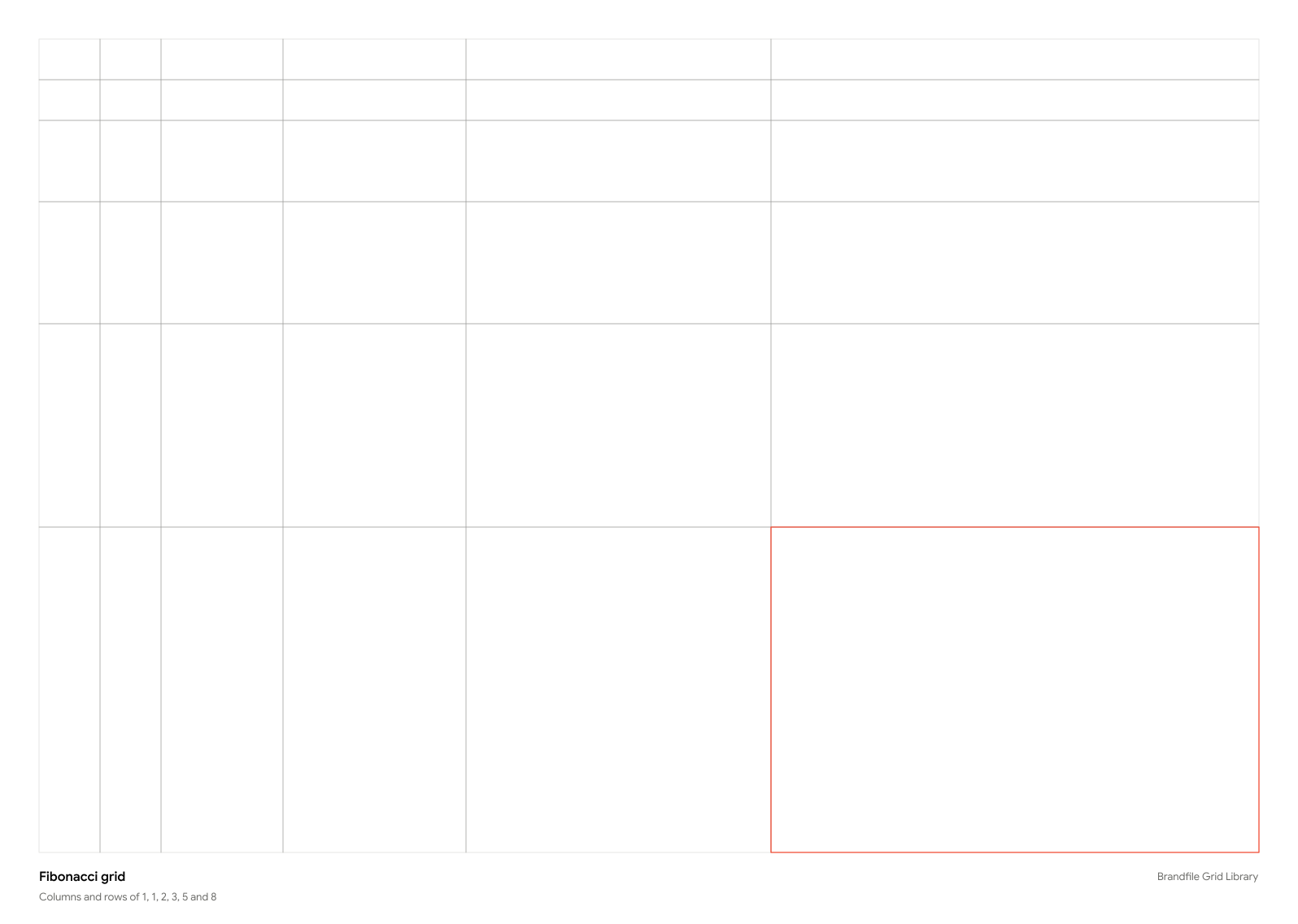
Fibonacci grid
A Fibonacci grid uses columns and rows sized 1, 1, 2, 3, 5 and 8. Each part is the sum of the two before it, so the sizes grow with a steady rhythm.
Free for personal and client work. Opens in Illustrator, Affinity, Figma and Inkscape.
What it's for
- Layouts with parts of very different sizes
- Image grids and galleries
- Bento-style brand boards
How to draw it
- Add up 1, 1, 2, 3, 5 and 8 to get 20 parts.
- Divide the width into 20 equal steps.
- Draw the column edges after 1, 2, 4, 7 and 12 steps.
- Do the same down the height for the rows.
- Give the largest cell to the main element.
When not to use it
The smallest columns get very thin on narrow screens. Use fewer steps for small formats.
What's in the file
One SVG, 1596 by 1136, with four named layers, so you can lock the grid and draw above it:
- Frame: the edge of the grid.
- Construction: the grid lines, in warm grey.
- Accents: the lines and points that matter most, in coral.
- Labels: the name and a short note, as outlines. Hide it while you draw.
Get all 54 grids
The whole Grid Library in one ZIP: every grid in 8 numbered folders, with a README that names each one. We email it to you, free.
Do it on your own logo
Brandfile's Layouts step places your logo on 11 formats by one rule, with a size table and grid settings for Figma and InDesign. See Layouts.